Create a Craft Business with Visual Identity in 2026
28/04/2026
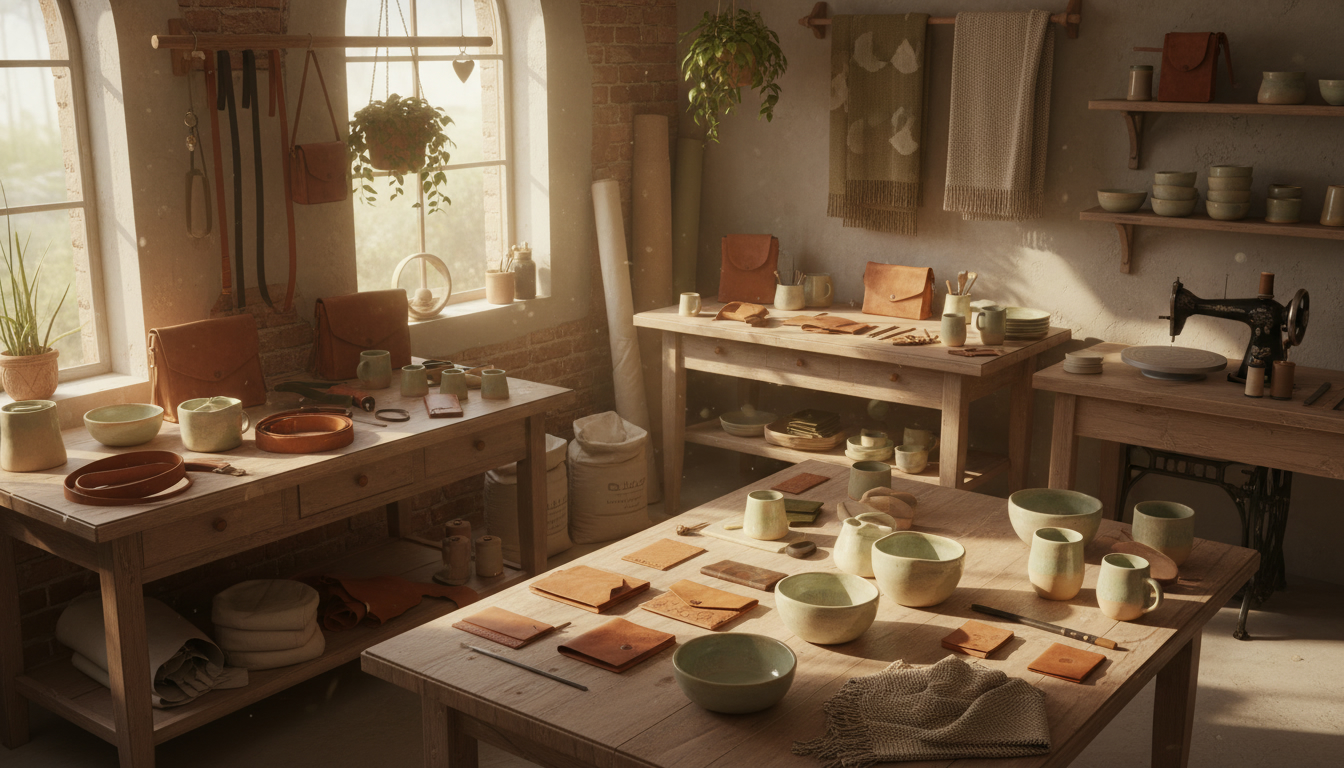
In short, what you will discover in this article: how to create a craft business with a strong visual identity and unique accessories to stand out effectively. You will find a complete guide, from market research to communication, including product design and branding.
1. Why create a craft business with visual identity and unique accessories
Starting a craft business is not just about making products. It’s also about building a strong visual identity that reflects your personality and values. This identity, combined with unique handcrafted accessories, allows you to capture your customers’ attention and differentiate yourself sustainably in a often saturated market.
To succeed, it’s essential to adopt a clear and consistent artisanal brand strategy. This involves well-thought-out artisan business branding, which includes visual identity design, customization of handcrafted accessories, and tailored artisanal communication materials. For example, the platform babelsouk.fr offers useful resources to support entrepreneurs in this process.
2. Market research and positioning
2.1 Identify the craft niche and target audience
Before creating your craft business, define your niche precisely. What type of unique handcrafted accessories do you want to offer? Who is your target audience? Building a customer persona will help you guide your visual identity and communication.
2.2 Analysis of local and online competition
Study competing artisans in your sector and online. Identify their strengths and weaknesses, as well as their choices in terms of branding and accessories. This analysis will help you position your brand in an original and relevant way.
3. Define the brand identity
3.1 Name, slogan, and brand values
The name and slogan must embody your mission and values. They are the first step to creating a strong brand image. Think of words that evoke your know-how, authenticity, and unique style.
3.2 Color palette, typography, and logo
Choosing colors and typography is crucial for visual identity design. Limit yourself to three main colors and one or two readable fonts. The logo, meanwhile, must be simple, memorable, and adaptable to all your materials.
3.3 Visual universe and storytelling (tone, message, persona)
Build a coherent visual universe that tells your story. Storytelling strengthens your clients’ emotional attachment to your brand. Adapt the tone and message to your target audience to create an authentic connection.
4. Designing unique accessories
4.1 Choice of materials and artisanal techniques
Select materials that reflect your values (durability, quality) and master artisan techniques that guarantee the originality of your unique handcrafted accessories.
4.2 Prototyping and quality testing process
Create prototypes to test feasibility and aesthetics. Involve customer feedback to adjust your creations and ensure consistent quality.
4.3 Collections, customization, and limited editions
Offer themed collections and focus on customization to enhance exclusivity. Limited editions create a sense of urgency and highlight your craftsmanship.
5. Branding applied to products and packaging
5.1 Design of labels, packaging, and coordinated stationery
Packaging is a powerful lever to enhance your accessories. Create labels and stationery that match your visual identity for a complete customer experience.
5.2 Visual consistency between product, store, and online materials
Ensure graphic harmony between your products, your physical or online store, and your artisanal communication materials. This consistency strengthens brand recognition.
6. Production, pricing, and logistics
6.1 Cost estimation, calculation of cost price, and margin
Calculate your production costs precisely to set a fair price that covers your expenses while remaining attractive.
6.2 Sourcing, suppliers, and workshop management
Select reliable suppliers and organize your workshop to optimize production and quality.
6.3 Stock, shipping, and sustainable packaging options
Plan stock according to demand and prioritize eco-friendly packaging to enhance your artisanal image.
7. Sales and distribution strategy
7.1 Creation of an optimized e-commerce site (technical SEO and content)
A well-referenced website is essential to reach your customers. Include detailed descriptions and attractive visuals for your unique handcrafted accessories.
7.2 Selling in stores, markets, pop-ups, and through resellers
Diversify your sales channels to maximize visibility and sales.
7.3 Pricing policy, promotions, and customer loyalty
Implement a clear commercial policy with promotional offers and a loyalty program to encourage repeat purchases.
8. Communication and customer acquisition
8.1 Visual content: product photography, lookbook, stories
Invest in professional visuals that showcase your visual identity and accessories.
8.2 Social media, collaborations, and relevant influencers
Use social media to build an engaged community. Collaborate with influencers related to your universe.
8.3 Press relations, events, and local partnerships
Organize events and establish partnerships to increase your local visibility.
9. Legal protection and formalities
9.1 Choice of legal status and registration
Choose a status suited to your artisanal activity and complete the necessary administrative procedures.
9.2 Brand protection, copyrights, and model registration
Protect your visual identity and creations to prevent counterfeiting.
10. Launch, monitoring, and optimization
10.1 Launch plan (pre-launch, launch, post-launch)
Organize a precise calendar to maximize the impact of your launch.
10.2 Metrics and KPIs: traffic, conversion, average basket, customer feedback
Regularly analyze your performance to adjust your strategy.
10.3 Product iteration and evolution of visual identity
Evolve your offer and image based on customer feedback and market trends.
11. Conclusion
Creating a craft business with a strong visual identity and unique accessories requires a structured and thoughtful approach. By following these steps, you will lay the foundation for an authentic and distinctive brand. To deepen your entrepreneurial project, discover our practical advice for starting your business and succeeding in your launch.
For further reading, check out the complete guide by Petite FabriK' on how to launch your craft brand, which precisely details creating impactful visual identity and standing out with unique accessories.

Nicolas Joly
Ancien artisan devenu consultant en création d'entreprise dans le secteur manuel, je mets plus de quinze ans d'expérience au service des futurs entrepreneurs du bâtiment et des métiers physiques. Mon parcours m'a permis d'accompagner des profils très variés, du néophyte au professionnel en reconversion, en démystifiant les étapes clés de la création d'activité. Je partage ici des conseils pragmatiques et accessibles pour guider chacun dans le choix de son statut, la gestion administrative et la recherche de ses premiers clients. Mon objectif est d'aider les porteurs de projets à franchir le cap avec sérénité et confiance, en rendant l'entrepreneuriat concret et abordable.